
The Complete Guide to Aluminum Etching: Processes, Methods, Applications and FAQs
Date: 2026-02-23 Categories: Blog Views: 564
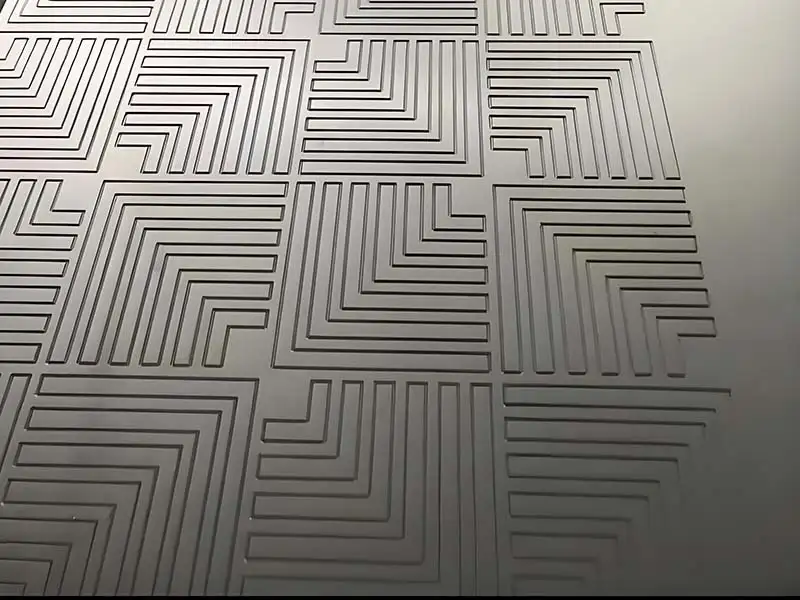
In the field of metal processingAluminum Alloy EtchingIt is a precision machining technology that is both ancient and modern. From heat sinks inside smartphones, to lightweight structural components in airplanes, to beautiful metal nameplates, theAluminum Etching ProcessEverywhere.
The so-called etching refers to the process of selectively dissolving metal materials through chemical or electrochemical methods, thus forming precise patterns, characters or specific structures on the surface of the workpiece. Aluminum alloy is one of the most commonly used materials in the etching process due to its low density, good electrical and thermal conductivity, and excellent processability.
This article will provide you with an overview of theAluminum etchingA comprehensive guide covering fundamentals, key methods, detailed processes, quality control, solutions to common problems, and application examples. Whether you are an engineer, a designer, or a hobbyist interested in metal finishing, this is a valuable reference.
1. Basic principles of aluminum alloy etching
realizeAluminum etching, first need to understand the science behind it.
The essence of etching is selective dissolution. When we immerse an aluminum alloy workpiece in a specific chemical solution, the exposed aluminum metal undergoes a redox reaction with the etching solution, producing soluble aluminum salts that are dissolved and removed. The area protected by the masking material, on the other hand, remains unchanged, ultimately creating the desired bump pattern.
The etching process of aluminum alloys is significantly influenced by their material properties:
- natural oxide layer: Aluminum rapidly forms a dense film of aluminum oxide (Al?O?) in air, and this film has some corrosion resistance. Before etching, it is usually necessary to remove this oxide film or use an etching solution that can penetrate the oxide film.
- Alloy Composition: The etching behavior of pure aluminum is significantly different from that of aluminum alloys (e.g., 6061, 5052, 7075, etc.). Elements such as silicon, magnesium and copper in the alloy affect the etching rate and surface quality.
A typical etching reaction (alkaline etching as an example) can be simplified as:
2Al + 2NaOH + 2H?O → 2NaAlO? + 3H?↑
2. Main methods of etching aluminum alloys
Depending on the processing principle and the applicable scenario, theAluminum etchingThere are three main methods:
2.1 Chemical etching
Chemical etching is the most traditional and commonly used method and is accomplished by immersing or spraying the workpiece with an etching solution.
- Principle and CharacteristicsPure chemical reaction, no need for external power supply. Simple equipment, suitable for mass production, especially suitable for double-sided simultaneous etching.
- Commonly used etching solution:
- Alkaline etching solution: Sodium hydroxide (NaOH) is the main, low cost, fast etching rate, but the side corrosion is more obvious, suitable for rough processing.
- Acid etching solution: Ferric chloride (FeCl?), hydrochloric acid or nitric acid are the main ones, with less side-etching and higher precision, suitable for fine patterns.
- advantages and disadvantages: Advantages are easy operation and controllable cost; disadvantages are high environmental pressure (waste liquid treatment) and accuracy affected by temperature and concentration fluctuations.
2.2 Electrochemical etching
Electrochemical etching is an etching performed under the action of an applied electric field, where the workpiece acts as an anode and is dissolved in an electrolyte.
- Principle and Characteristics: Etching depth and rate can be more precisely controlled by controlling voltage and current density. Good etching directionality and less side etching.
- Electrolyte Selection: Salt solutions such as sodium chloride (NaCl) and sodium nitrate (NaNO?) are commonly used, which makes the disposal of waste liquid relatively easy compared to chemical etching.
- advantages and disadvantages: Advantages are high precision, good surface finish; disadvantages are the need for DC power supply and conductive fixtures, equipment investment is high, is not suitable for the shape of the workpiece is too complex.
2.3 Laser Etching
Laser etching is a physical processing method that uses a high-energy laser beam to ablate a pattern directly onto an aluminum surface.
- Principle and Characteristics: Non-contact processing, no chemicals required, environmentally friendly. Extremely high precision, can process micron-level patterns.
- Applicable Scenarios: Suitable for small batch, high precision or personalized customization, such as product serial number, QR code, precision mold texture, etc.
- Comparison with other methods: Laser etching does not require a mask, high flexibility, but processing efficiency is relatively low, and will form a heat-affected zone on the surface, thickness removal is limited, mainly used for surface marking rather than deep etching.
3. Aluminum alloy etching process details
A successfulAluminum Etching ProcessRigorous process control is indispensable. The following is the standard four-step process:
3.1 Pre-processing
The quality of pre-treatment directly determines the success or failure of etching.
- Surface cleaning: Removes oil, fingerprints and natural oxidation from aluminum surfaces. Usually, alkaline degreasing agent is used to remove oil first, and then acid washing is used to remove the oxidized film.
- Masking (graphic transfer): Cover the area to be protected. Commonly used methods include:
- Photographic blue oil/dry film: For high-precision graphics, where patterns are formed by exposure development.
- screen printing: Suitable for high volume production and printing of acid and alkali resistant inks.
- protective film: For simple patterns or large area protection.
- caveat: The masking layer must be firmly bonded to the aluminum substrate without bubbles or pinholes, otherwise the etching solution will seep in and cause defects.
3.2 Etching operation
- Etching solution preparation: Prepare strictly according to the recipe and control the concentration. For example, NaOH solution of 5-10% is commonly used for alkaline etching.
- temperature control: For every 10°C increase in temperature, the reaction rate may double. Typically alkaline etching is controlled at 40-60°C and acid etching at 30-50°C.
- Time and Depth Monitoring: Time is calculated based on the required depth and etching rate. This can be monitored by periodically removing the sample for measurement.
- Mixing and venting: Stirring ensures that the etching solution concentration is uniform and takes away the hydrogen bubbles generated by the reaction in time, preventing the bubbles from adhering to cause localized over-etching or pitting.
3.3 Post-processing
- Cleaning and Neutralization: Immediately after the etching is completed, rinse with a large amount of water to terminate the reaction. For alkaline etching, dilute nitric acid or dilute sulfuric acid is commonly used to neutralize and remove the residual gray and black hanging ash on the surface.
- go into hiding: Remove protective inks or film layers using specialized stripping fluids or organic solvents.
- Surface treatment (optional): Depending on the requirements, passivation can be applied to improve corrosion resistance or anodized to obtain different colors and wear-resistant surfaces.
4. Key factors affecting the quality of etching
To get high qualityAluminum etchingproducts, the following factors must be strictly controlled:
- Aluminum alloy gradesEtching rate may vary from 20%-50% for different grades (e.g. 1060 pure aluminum, 6061 alloy, 7075 super-hard aluminum) with different chemical compositions. it is recommended to do a small sample test first.
- Etchant concentration and temperature: These are the two most active variables. Process windows need to be established with on-line monitoring equipment.
- Etching time: Too short a period of time does not provide enough depth, while too long a period of time results in severe lateral erosion (pattern edges are hollowed out).
- Equipment and operating specifications: Automated spray equipment provides better uniformity than manual dipping. Operator proficiency is also critical.
5. Common defects and solutions for aluminum alloy etching
Even experienced engineers inevitably encounter problems. The following are common defects and countermeasures:
| common defect | Possible causes | prescription |
|---|---|---|
| Uneven etching | Inadequate mixing; uneven temperature distribution; surface contamination | Enhanced agitation or circulation; check heating systems; enhanced pre-treatment cleaning |
| Over-etching (depth overshoot) | Too long; too high temperature; too high concentration of etching solution | Reduce time; reduce temperature; dilute concentration; establish more precise time control |
| Heavy lateral erosion (curved edges) | Too long etching time; poor adhesion of masking layer; too aggressive etching solution | Optimize etch time; check mask quality; consider changing etchant type or additives |
| Surface roughness or pitting | Excessive impurities in etching solution; alloy composition segregation; bubble attachment | Filtering or replacing etchant; checking material batches; intensifying agitation or adding anti-porosity etchants |
| Masking failure (peeling or leaking) | Poor pretreatment; poor ink/dry film quality; insufficient baking | Thorough cleaning of the surface; replacement of the masking material; optimization of the curing process |
6. Application areas for aluminum etching
Aluminum etchingIt is widely used in many fields due to its advantages of high precision, no burr, and not affecting the mechanical properties of the material:
- aerospace: Used in the manufacture of lightweight ventilation panels, heating elements, precision filters, etc.
- electronics industry: This is one of the largest markets for applications including cell phone/computer heat sinks, electromagnetic shielding covers, IC leadframes, and substrates for flexible circuit boards.
- Advertising & Signage: Produce high-grade metal nameplates, signs and decorative panels with clear patterns and a strong sense of three-dimensionality.
- automobile manufacturing: For automotive dashboard decorations, brand logos, interior textured panels, etc.
- Arts & Crafts: Artists use etching techniques to create prints, souvenirs and personalized gifts on aluminum panels.
7. Safety and environmental considerations
Etching process involves chemicals, safety and environmental protection should not be ignored:
- Chemical safety:
- Strong acids (e.g., sulfuric acid, nitric acid) and strong bases (e.g., sodium hydroxide) are highly corrosive, and protective eyewear, acid and alkali-resistant gloves, and protective aprons must be worn during operation.
- Hydrogen gas may be generated during the etching process, the workplace must be well ventilated and open flames are strictly prohibited.
- Personal protective equipment (PPE): At a minimum, this should include: chemical resistant goggles, acid and alkali resistant gloves, protective clothing, and non-slip, non-corrosive work shoes.
- Waste liquid treatmentWaste liquids containing aluminum ions and heavy metals must be neutralized, precipitated, etc., and discharged only after meeting the standards, and it is strictly prohibited to pour them directly into the sewers. It should be entrusted to qualified environmental protection company for treatment.
- emergency plan: Emergency showers and eyewashes should be provided at the site and appropriate spill handling materials (e.g., sorbent cotton, neutralizer) should be stored.
8. Advanced technology and future trends in aluminum alloy etching
As manufacturing moves toward precision and greening, theAluminum etchingThe technology is also evolving:
- Environmentally friendly etching solution: Develop recyclable, low-toxicity etchant solutions, such as systems based on persulfate or trivalent iron, to minimize waste solution emissions.
- Precision Etching and Micromachining: Combined with photolithography to realize micron-level precision etching for MEMS (microelectromechanical systems) and precision optical components.
- Automation and Intelligence: Introducing PLC (Programmable Logic Controller) and machine vision to realize automated control and on-line quality inspection of etching process to improve product consistency and yield.
9. Frequently Asked Questions (FAQ)
Q1: What basic equipment is needed for aluminum etching?
A1: The most basic configuration includes: pre-treatment tanks (degreasing, washing), etching tanks (heating and stirring functions are required), post-treatment tanks (washing, neutralization), drying equipment and the necessary personal protective equipment. Industrial mass production also requires graphic transfer equipment such as exposure machines and developers.
Q2: How to choose the right etching method?
A2: Depends on your needs: for low cost and high volume, choose chemical etching; for high precision and low side etching, choose electrochemical etching; for small volume, high flexibility or no mask, choose laser etching.
Q3: How to precisely control the etching depth?
A3: Mainly by controlling the etching time and temperature. The etching rate (microns/minute) of a particular etchant at a particular temperature for a particular grade of aluminum alloy is first determined experimentally, and then the time required is calculated based on the target depth. Electrochemical etching can also be more precisely controlled by controlling the amount of electricity (amperes*minute).
Q4: What is the difference in etching rate for different grades of aluminum alloys?
A4: It varies a lot. In general, pure aluminum (e.g., Series 1) has the fastest etch rates. Aluminum alloys containing silicon, copper, etc. (e.g., Series 2, 6, 7) have slower etch rates and may require adjustments to the etchant formulation. Process testing is recommended for specific grades.
Q5: How is the surface treated after etching?
A5: Common post-treatments include: neutralization to remove hanging ash, passivation to improve corrosion resistance, anodizing to obtain abrasion resistance and color, and spraying with clear protective lacquer.
Q6: What are the cost components of aluminum etching?
A6: The main costs include: material costs (aluminum), chemical costs, mask material costs, labor costs, equipment depreciation, and most importantly, environmental treatment costs. Among them, the cost of waste liquid treatment has been increasing in recent years.
Q7: Are there environmentally friendly alternatives to etching?
A7: Laser etching is a physical solution that is completely environmentally friendly. In the field of chemical etching, research is moving toward recyclable, low-toxicity etchant solutions. At the same time, rigorous waste solution treatment and resource recovery (e.g., recycling aluminum salts) are key to achieving environmentally friendly production.
Q8: What should I do if air bubbles appear during the etching process?
A8: Bubbles (mainly hydrogen) adhering to the surface can cause localized inability to etch and form spots. Solution agitation, vibration of the workpiece, or the addition of a wetting agent/anti-pinhole agent should be intensified to help the air bubbles quickly detach from the surface.
Q9: How can I avoid rough etching edges?
A9: Edge roughness is usually associated with side etching and dissolution of the mask edges. Attempts can be made to: use a masking material with better adhesion; optimize etching parameters to reduce side-etching; use electrochemical etching; and perform light edge trimming after etching.
Q10: What is the difference between aluminum etching and stainless steel etching?
A10: Both are similar in principle but have different material properties. Stainless steel is more resistant to corrosion and requires a more oxidizing etchant (e.g. ferric chloride + hydrochloric acid). Aluminum alloys are more reactive and more sensitive to etchant concentration and temperature. Stainless steel etching rates are typically slower than aluminum alloys.
10. Conclusion
Aluminum etchingIt is a mature and precise processing technology, which perfectly combines chemistry and art to give modern industrial products precise functions and exquisite appearance. From mastering the basic principles, to choosing the right process method, to strictly controlling every process detail and solving unexpected problems, every link affects the quality of the final product.
With increasingly stringent environmental regulations and rising market demand for precision, aluminum alloy etching technology is evolving in the direction of greener, smarter, and more precise. We hope this article can provide you with a practical reference guide. In practical application, it is recommended to combine specific product requirements and production conditions, conduct sufficient process tests, and if necessary, seek technical support from professional etching manufacturers to achieve the best processing results.